
Creating a cohesive outdoor space takes more planning than choosing individual projects one at a time. A new fence, swimming pool, patio, landscaping design, or seating area may look appealing on its own, but the best results come when every improvement supports the way the property will be used. Homeowners who think about circulation, privacy, maintenance, comfort, safety, and future needs can avoid changes that compete with one another or create extra work later.
A coordinated plan also helps families decide which projects should happen first. Tree work may need to be completed before a new fence goes in, while pool improvements may influence furniture placement, landscaping, and shade.
Instead of approaching the yard as a collection of separate upgrades, homeowners can treat it as one connected environment. Looking at the entire property makes it easier to select materials, schedule contractors, and create spaces that feel intentional. With the right order of operations and a clear understanding of how each area connects, outdoor improvements can become easier to manage and more useful for everyday living.
Begin With a Clear Plan for the Entire Property
Before hiring contractors or purchasing materials, homeowners should identify what they want the outdoor space to accomplish. Some families may need more room for entertaining, while others may prioritize privacy, play space, gardening, or easier maintenance. Mapping out these goals helps determine where structures, pathways, trees, and gathering areas should be located.
A landscaping contractor can help evaluate existing grades, drainage patterns, sunlight, plantings, and traffic flow. These factors influence where patios, lawns, planting beds, and recreational areas will work best. A well-planned landscape can also provide transitions between different parts of the yard so that the space feels connected instead of divided into unrelated zones.
Homeowners should also note permanent features that are difficult or expensive to move later. Pools, large trees, utility lines, sheds, driveways, and retaining walls can shape the rest of the plan.
It is useful to consider future projects during this stage, even if they are not part of the immediate budget. Leaving room for a later pool, pergola, outdoor kitchen, or play structure can prevent homeowners from having to remove newer improvements. Planning the full property first creates a framework that allows individual projects to work together more effectively.
Address Trees Before Building Around Them
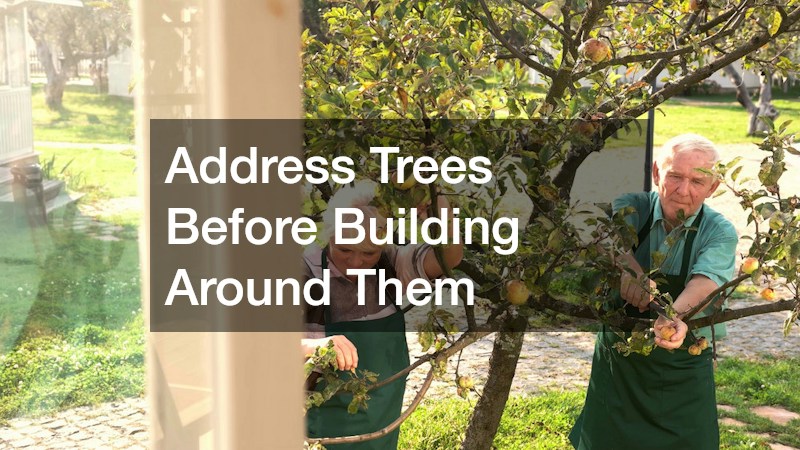
Trees can be some of the most valuable features in a yard, providing shade, privacy, and visual interest. They can also affect nearly every major outdoor project. Large roots may interfere with paving or fences, low branches may limit building space, and unhealthy trees can create safety concerns near pools, patios, and structures.
Local tree services can help homeowners evaluate existing trees before construction begins. An arborist or tree professional may identify dead branches, disease, structural weaknesses, or growth patterns that could become problematic later. Addressing these issues early allows other contractors to work around healthier trees while reducing the chance that newly installed features will need to be disturbed.
Tree trimming services may be useful when branches extend over roofs, pools, seating areas, or planned construction zones. Strategic trimming can improve clearance and visibility while preserving trees that still contribute to the landscape. Homeowners should avoid unnecessary cutting that could weaken a tree or change its natural structure.
In other cases, local tree removal may be necessary for trees that are dead, unstable, poorly positioned, or in direct conflict with planned improvements. Removal should generally happen before new fences, patios, or landscaping are installed so equipment can access the area without damaging finished work.
Once tree decisions are made, homeowners can plan shade, planting, and seating around the remaining canopy.
Coordinate Fencing With Privacy and Circulation
Fencing can define property lines, improve privacy, create secure spaces for children or pets, and shape how people move through a yard. Because fences affect both appearance and function, they should be planned alongside landscaping, pool areas, driveways, and major gathering spaces rather than added as an afterthought.
Vinyl fence contractors can help homeowners compare styles, heights, gate locations, and layout options. Vinyl is often chosen for its relatively low maintenance requirements, but the right design depends on how the fence needs to function. A tall privacy fence may make sense along one property line, while a shorter or more open design may work better near gardens or scenic areas.
Gate placement deserves careful attention. Gates should connect naturally with walkways, driveways, pool access points, and frequently used entrances. Poorly positioned gates can force people to walk around obstacles or across lawns, creating worn paths and unnecessary inconvenience.
Homeowners should also coordinate fence installation with tree and landscaping work. Large roots, planned planting beds, and drainage routes may affect where posts can be placed. If tree work is needed, completing it first can prevent damage to a new fence.
A coordinated fencing plan can support visual consistency. Colors and styles can complement outdoor structures, pool finishes, and furniture, helping the fence feel like part of the overall design.

Plan Pool Improvements as Part of the Landscape
A swimming pool often becomes the focal point of a backyard, so changes to the pool should be considered in relation to the surrounding landscape. Homeowners planning pool upgrades should think about decking, shade, seating, fencing, lighting, drainage, and plant placement at the same time.
Pool resurfacing can refresh an aging swimming pool and address worn or deteriorated interior finishes. Before choosing a finish, homeowners should consider how the color and texture will coordinate with nearby paving, coping, furniture, and landscaping. A pool that visually connects with surrounding materials can make the entire yard feel more unified.
Homeowners planning a major redesign may also work with a local luxury pool contractor to explore features such as integrated spas, tanning ledges, water features, upgraded lighting, or redesigned pool decks. These additions can affect how much space remains for furniture, pathways, and landscaping, so they should be incorporated into the broader site plan.
Screened pool areas require another layer of coordination. A pool screen repair company can address damaged mesh, frames, doors, or other enclosure components. Repairs may be especially important before adding nearby furnishings or landscaping because a properly maintained enclosure can influence how the area is used.
Pool improvements should also account for safe circulation. Walkways between the house, pool, gates, and seating areas should be clear and easy to navigate. Planning these connections early helps keep the pool area functional as well as attractive.
Select Furniture After Defining Activity Zones
Outdoor furniture is often one of the most visible elements in a completed backyard, but it should not be selected before homeowners understand how each area will function. Furniture dimensions, traffic flow, shade, and storage needs can all influence which pieces make sense.
Outdoor furniture stores offer dining sets, lounge seating, sectionals, umbrellas, benches, and other pieces designed for exterior use. Before shopping, homeowners should measure patios, decks, pool areas, and covered spaces. Leaving enough room around tables and chairs is important because crowded furniture can make even a large space feel difficult to navigate.
It can help to divide the yard into activity zones. A dining area may work best near the kitchen, while lounge seating may be more comfortable near the pool or in a shaded corner. Families may also want a separate conversation area, fire pit zone, or quiet space for reading.
Materials should match local conditions and maintenance preferences. Sun, rain, humidity, and temperature changes can affect how furniture materials age. Homeowners should also plan storage for cushions and accessories.
Furniture placement can support the overall design by framing views and encouraging natural movement. Rather than filling every open space, homeowners can leave clear paths between major areas. When furniture is selected after the yard layout is established, it is easier to create comfortable spaces without blocking circulation or competing with landscaping.
Improve Water Quality Alongside Outdoor Upgrades
Water quality may not be the first consideration during an outdoor renovation, but it can influence how homeowners use and maintain the property. Water is needed for drinking, cooking, gardening, cleaning, outdoor showers, pools, and irrigation, so evaluating household water can be a practical part of broader improvement planning.
Water purification systems are designed to address specific water quality concerns. Depending on the system, treatment may focus on sediment, taste, odor, minerals, or particular contaminants. Homeowners should avoid choosing equipment based only on general claims and instead identify the actual characteristics of their water before deciding what treatment is appropriate.
A whole-home system may serve indoor and outdoor fixtures, while point-of-use systems treat water at specific locations. Filters, cartridges, membranes, or other components may need regular replacement.
Outdoor projects can also create opportunities to review irrigation and plumbing. New landscaping may require different watering zones, while a pool renovation or outdoor kitchen may involve additional water connections. Coordinating these needs can reduce repeated digging or plumbing changes later.
Efficient water use is another consideration. Drip irrigation, properly positioned sprinklers, and plants suited to local conditions can reduce unnecessary watering. By looking at water quality and water use together, homeowners can create a property that is easier to maintain and better prepared for future improvements.
Connect Landscaping, Shade, and Maintenance Needs
Landscaping helps tie outdoor structures, pools, fences, and seating areas together. Plants can soften hard surfaces, provide privacy, create shade, and guide movement through the yard. However, plant selection should account for long-term growth and maintenance rather than appearance alone.
Homeowners should consider mature plant size before installing shrubs or trees near fences, pool decks, walkways, or structures. A small plant can eventually block a path or crowd a seating area if its growth is not considered. Roots may also affect paving, walls, or underground utilities.
Shade should be planned strategically. Existing trees may provide cover, while pergolas, umbrellas, or covered patios can supplement areas that receive stronger sun. A mix of sunny and shaded spaces can make the yard comfortable at different times.
Maintenance needs should also influence plant choices. Households that prefer a low-maintenance yard may want fewer high-care plantings and more durable ground covers or defined beds. Irrigation systems should be designed around actual planting zones rather than watering large areas unnecessarily.
Homeowners should leave enough clearance around pools, fences, and outdoor furniture for cleaning and repairs. Dense landscaping may look attractive initially but can make maintenance difficult if contractors cannot access equipment or structural components. Thoughtful spacing allows plants to mature while keeping the rest of the property easier to manage.
Schedule Projects in an Order That Prevents Rework
Even a strong design can become difficult to execute if projects happen in the wrong sequence. Heavy equipment, excavation, tree removal, trenching, and construction can damage finished surfaces, so homeowners should create a logical schedule before work begins.
Major clearing and tree work generally belong near the beginning of the process. Underground utilities, drainage, irrigation, or plumbing changes should also be addressed before patios, lawns, or decorative landscaping are finished. Pool construction or major renovations may require substantial access, making them another project that should happen before delicate finishing work.
Fencing, hard surfaces, and permanent structures can usually follow once major excavation and utility work are complete. Landscaping can then be installed around established features, followed by furniture, decorative pieces, and smaller finishing touches.
Communication between contractors can help prevent conflicts. Sharing site plans, measurements, and project schedules allows each professional to understand what will happen before and after their portion of the work. Homeowners should also confirm access requirements because some projects may require gates, driveways, or side yards to remain open until heavy equipment is removed.
A coordinated schedule can also help homeowners manage their budget. Breaking a larger plan into phases allows improvements to be completed over time without losing sight of the overall design. Each phase should prepare for the next rather than creating obstacles that need to be undone.
When outdoor projects are planned as one system, the property can function smoothly. Coordinating trees, fencing, pools, furniture, landscaping, and water improvements helps reduce rework and support changing needs.